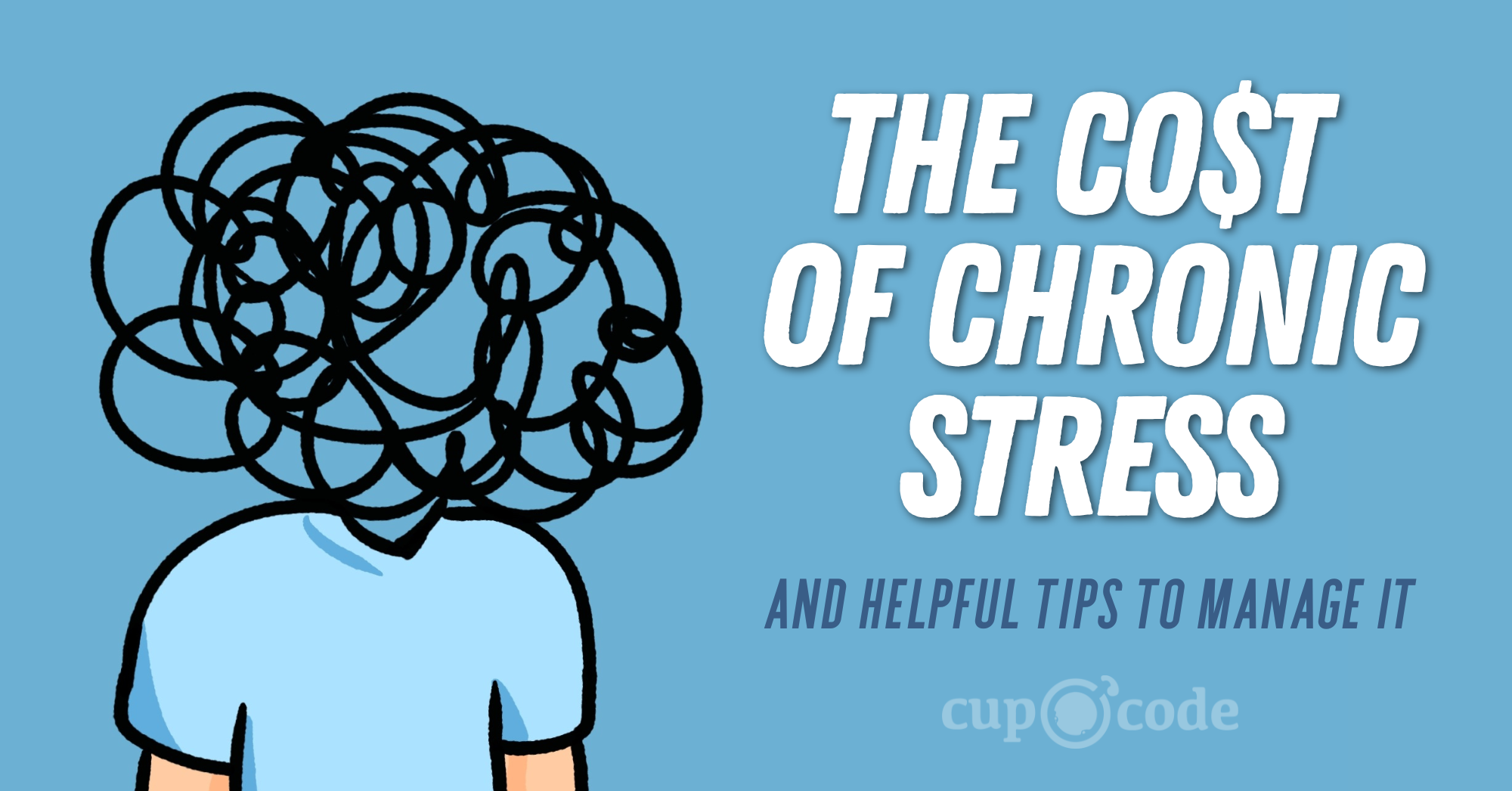
Consistently worrying about that next deadline? Staying up late to get ahead of a never-ending list? Over-performing out of fear that somehow you aren’t “enough”? Chronic stress has a cost, and you’re paying for it with the most valuable resource you have: your health.
I’ve experienced this cost first-hand. After becoming a widow and then being diagnosed with stage 3 cancer 10 months later, I realized how intertwined the heart, body and mind really are and how chronic, sustained stress can actually destroy our physical bodies. We spend so much time eating right, exercising and going to the doctor for ailments that manifest physically. Yet, we tend to neglect the slow poison of stress that equally wrecks our well-being.
So let’s talk about the price our bodies pay when we turn a blind eye to the things that regularly cause us stress and how we can change the patterns that keep us trapped in it.
Stress: Our Internal Alarm System
Our bodies are designed with an internal security system that perceives threats in the hypothalamus then sets off alarms through nerve and hormone signals to our various body systems. These signals are intended to prompt things like adrenaline to increase energy or cortisol to usher in alertness or repair. When functioning as intended, stress is both natural and necessary to survival.
I once had two friends who were pregnant and due on the same date. Both of these friends carried their babies exactly 2 weeks overdue when a hurricane hit on their due date. Some studies suggest that maternal stress can delay labor like this or even influence sex ratios at birth. Researchers believe this to be an evolutionary response to protect populations in times of war, famine or other natural disasters. These are examples of stress doing its job. Your body’s stress response is designed to be self-limiting, slowing or enhancing certain body functions or adapting to protect in times of threat.
Chronic Stress: When the Alarm Gets Stuck
But what happens when there is no end to the stressful situation? When the threats just keep coming without reprieve? This is when stress becomes chronic and can actually work against your body. Instead of turning on briefly and then shutting off, cortisol stays elevated. Ever left a waterhose on in your garden for hours on end? (This happens to me regularly when I’m multitasking, lol.) What was helpful and necessary can, over time, become destructive.
Over time, elevated cortisol can disrupt blood sugar control, contribute to high blood pressure, interfere with sleep-wake patterns, and weaken your immune system. Although cortisol initially decreases inflammation, persistently high levels actually promotes more inflammation as the body becomes less responsive to it. In other words, a response designed to protect you in a threatening moment can become harmful when the body never gets the signal that the danger is past.
The High Cost of Chronic Stress
When I was first diagnosed, I didn’t “fit” into any known box when it comes to predispositions for my cancer. I was negative for every key or genetic marker they’ve discovered so far, too. But after losing my husband and connecting with dozens of other widows who had similar diagnoses after their life-changing event, I knew that stress had to be a key factor. I began researching and found numerous peer-reviewed studies linking sustained cortisol levels due to intense stress activation with my particular type.
It felt like my body was keeping a tally of every sleepless night and every ‘power through’ moment. I started seeing my own reflection in the list below. If you’ve been feeling off, you might recognize these, too:
- Nervous system: anxiety, depression, sleep, memory, focus, vision impairment, hearing loss
- Endocrine system: unhealthy weight gain/loss, hormonal balance, diabetes
- Immune system
- Digestive system: IBS, ulcers
- Musculoskeletal system: joint pain, muscle aches, headaches, osteoporosis, arthritis
- Cardiovascular system: heart disease, heart attack, high blood pressure, stroke
- Reproductive system: menstrual cycle, libido, fertility
- Respiratory system: asthma, difficulty breathing, infections
- Integumentary system: skin problems like psoriasis or eczema, hair and nail loss
Severe cases have even been linked to diseases such as Cushing’s Syndrome, cancer or even alterations to your DNA!
What’s the true cost of stress? This analysis of peer-reviewed data from the APA and WHO reveals that the average U.S. worker pays $5,000–$15,000 a year in healthcare costs and lost productivity due to stress. Even more concerning, the study suggests stress can shave one to three years off a person’s lifespan.
Thriving or Addicted?
I’ve had several friends actually tell me that they “thrive on stress.” While short-term, low-level stress response can increase one’s capacity in many ways, science confirms that we can also become addicted to persistent levels of it. According to the British Association for Counselling and Psychotherapy (BACP), “stress addiction” often flies under the radar because it can feel like being productive or normal. When your nervous system is wired to expect chaos, oftentimes due to childhood environments, you may find calmness boring or even unsettling.
I used to think being the person who could ‘handle it all’ would make me useful and thus loved. Now, looking at this list, I realize how unfair of a burden that was to put on myself. If you find yourself nodding at these 6 signs of chronic stress addiction, you’re not alone. I’ve checked every single one of these boxes at some point, too.
- Overcommitting: You consistently struggle to say “no” to new tasks or responsibilities.
- Difficulty with Downtime: You feel anxious, restless, or uncomfortable when you aren’t “doing” something.
- Creating Conflict: You may subconsciously seek out drama or conflict, potentially because it generates the high-intensity environment your body is used to.
- Finding Calm Boring: You feel unnerved or bored when things are peaceful and steady.
- Constant Problem-Solving: You feel like you always need a new challenge or “problem” to fix to feel valuable.
- Guilt Around Productivity: You feel a sense of guilt or failure whenever you aren’t being actively productive.
Stress addiction often stems from an identity tied to being “busy.” If you aren’t pushing yourself to your limits, you might feel as though you aren’t fulfilling your purpose.
Are You Choosing Your Stress?
Before we talk about reducing stress, it’s important to differentiate between 2 types: stress you choose and stress that chooses you. Not all stress is created equal. Often we treat every flicker of anxiety or overwhelm as being urgent, but the reality is more nuanced. Understanding the difference between self-imposed stress and uncontrollable stress is the first step to reclaiming your peace of mind.
Stress You Choose (Self-Imposed)
This type of stress is often a byproduct of our own habits, standards, and boundaries. It’s the “busy work” we create to feel useful, the commitments we make despite an already full calendar, or the perfectionism that turns a simple task into a high-stakes ordeal.
Because this stress originates from within, you alone have the agency to change it.
- Audit your commitments: If your calendar is packed with “shoulds” rather than “musts,” it’s time to say no.
- Check your identity: Ask yourself if you’ve linked your self-worth to your output. If you feel guilty during downtime, or suffer from intense FOMO, you may be subconsciously seeking out stress to feel valuable or connected.
- Lower the stakes: Challenge the idea that every task requires 110% of your energy. Practice the art of “good enough.” Performing over 100% is unsustainable!
Stress You Can’t Control (External)
Life is full of uncontrollable variables: death, sickness, unexpected professional setbacks, global headlines, or the behaviors of others. Trying to “fix” these stressors is a recipe for burnout. In these cases, the goal isn’t to control or remove the stressor, but to change how you react to it.
When you hit an immovable stressor, shift your energy to your own physiological response:
- The Control Filter: When you feel the adrenaline spike, pause and ask: “Is this within my control?” If the answer is no, redirect that mental energy toward something you can influence.
- Regulate, don’t react: Use physical tools to calm your nervous system. Deep, intentional breathing exercises such as box breathing or grounding techniques that engage your senses can signal to your brain that you are safe, even when the situation is chaotic. (See immediate responses below.)
- Prioritize recovery: Uncontrollable stress is a major energy drain. Treat your downtime as a non-negotiable recovery period rather than a luxury. Just as you hopefully wouldn’t push yourself to run a race while sick with pneumonia, we must learn to give ourselves the same grace when dealing with highly stressful events in our lives.
Taking Back Control: Tips & Techniques to Reduce Chronic Stress
Now that you can categorize your stress, it’s time to build your toolkit. Strategies for managing stress fall into three buckets: immediate intervention for acute moments of overwhelm, long-term lifestyle shifts to address chronic stress, and daily maintenance to keep stress levels in check.
Immediate Responses
When acute stress hits, your body enters ‘fight-or-flight’ mode. These techniques hack your nervous system to restore calm. I learned these resets documenting retreats for the Alpha Wave Project, where I’ve watched veterans and first responders, professionals trained to remain in high-alert states 24/7, use them to effectively reclaim their peace.
- Box Breathing: Inhale for 4 seconds, hold for 4, exhale for 4, and hold for 4. Repeating this for two minutes forces your heart rate to slow down.
- 5-4-3-2-1 Grounding Method: This sensory exercise has been a game changer for me. It pulls your brain out of a spiral by forcing you to focus on the present environment and naming aloud:
- 5 things you can see
- 4 things you can physically touch
- 3 things you can hear
- 2 things you can smell.
- 1 thing you can taste
- Cold Exposure: Whether it’s a full cold plunge or simply pressing a cold pack against your chest or neck, cold exposure stimulates the vagus nerve. This is one of the fastest ways to force your body to transition from a sympathetic (stressed) state to a parasympathetic (rest-and-digest) state.
Long-Term Responses
If you find yourself constantly “addicted” to stress or unavoidably immersed in it, these habits can help you rewrite the script, becoming more resilient in how you navigate it.
- Audit Your “Overfunctioning”: We often take on more than our fair share because we equate “doing” with “being.” Take an honest look at your to-do list: are you doing these tasks because they must be done, or because you feel a need to prove your worth? Learn to delegate, defer, or delete. Remind yourself that the people worth keeping in your circle love you for who you are, not what you give.
- Release the Idealized Self: FOMO (Fear Of Missing Out) and the pursuit of a perfect, idealized version of yourself are massive, chronic energy drains. Accept that you cannot do everything, and that “good enough” is often the most sustainable metric for high performance.
- Practice Self-Compassion: We are often our own harshest critics. When you hit a limit, treat yourself with the same kindness you would offer a friend. Self-compassion isn’t lazy; it’s the fuel that prevents burnout. One of my favorite incentives for this is to keep a picture of myself as a little girl on my mirror or close by and reminding myself constantly to protect her at all costs.
- Prioritize “Radical Rest”: If you struggle to rest, you aren’t doing it right. Focus on the seven types of rest: physical, mental, emotional, sensory, social, creative, and spiritual. If you constantly feel guilty during downtime, recognize that rest is not a reward for work. It’s a biological requirement for sustained performance.
- Exercise Boundaries: Even when circumstances are beyond our control, boundaries are our own responsibility to set and enforce. Boundaries protect our peace and help others interact with us in a way that is mutually respectful of our resources. If you need help understanding boundaries or how to set them, consider reading this book by two renowned doctors on the topic.
Daily Maintenance
- Progressive Muscle Relaxation (PMR): This involves tensing a muscle group (like your shoulders or toes) as you breathe in, then suddenly releasing all tension as you breathe out. Practicing this daily can help you release stress-induced tension.
- Practice a “Digital Sabbath”: Dedicate one full day (or even just an evening) to being completely offline. No email, no social media, no client apps. Check out our full blog on this here.
- Nature Connection & Gardening: Countless studies confirm that connecting with nature can have a profound effect on your well-being. Research even supports that digging in dirt releases microbes that stimulate serotonin release, which gets depleted during chronic stress exposure.
- Movement: Instead of viewing a workout as “another task to finish,” view it as a metabolic discharge. When you feel that jittery “stress-addicted” energy, use it to move. Don’t just do the workout; use the movement to physically “dump” the stress hormones that have accumulated from a long day of meetings.
- Intentional “Brain Dumping”: If you find your mind racing at night (making it hard to get that GOOD REST), try a brain dump. Before bed, write down everything that is worrying you or everything you need to do tomorrow. Doing this offloads the cognitive burden from your working memory onto paper. It tells your brain, “I’ve recorded it; let it go.”
The Truth About Stress
Life will always include stress. Some of it we invite through our habits, our boundaries, or the impossible expectations we place on ourselves. Some of it chooses us through loss, illness, uncertainty, or circumstances we never would have wished for. We don’t always get to choose what happens to us, but we do have more influence than we realize in how we care for ourselves through it.
The same remarkable system that helps you survive life’s hardest moments was never designed to stay on high alert forever. It’s a switch that’s gotten stuck because we haven’t learned how to shut it off. When we ignore the signals our bodies are sending, we slowly begin paying for chronic stress with our sleep, our relationships, our peace, and ultimately our health.
You don’t have to earn your rest, and you don’t have to prove your worth through exhaustion. Where you can remove unnecessary stress, do it without guilt. Set the boundary. Say no. Lower the impossible standard. And where the stress can’t be removed… meet it with grace instead of self-condemnation. Rest when you need to. Ask for help. Breathe. Move. Pray. Heal. These aren’t signs of weakness. They’re acts of wisdom that allow your body to answer the alarm it’s been sending to recover.
Your body isn’t working against you. It’s been trying to protect you all along.