Summary
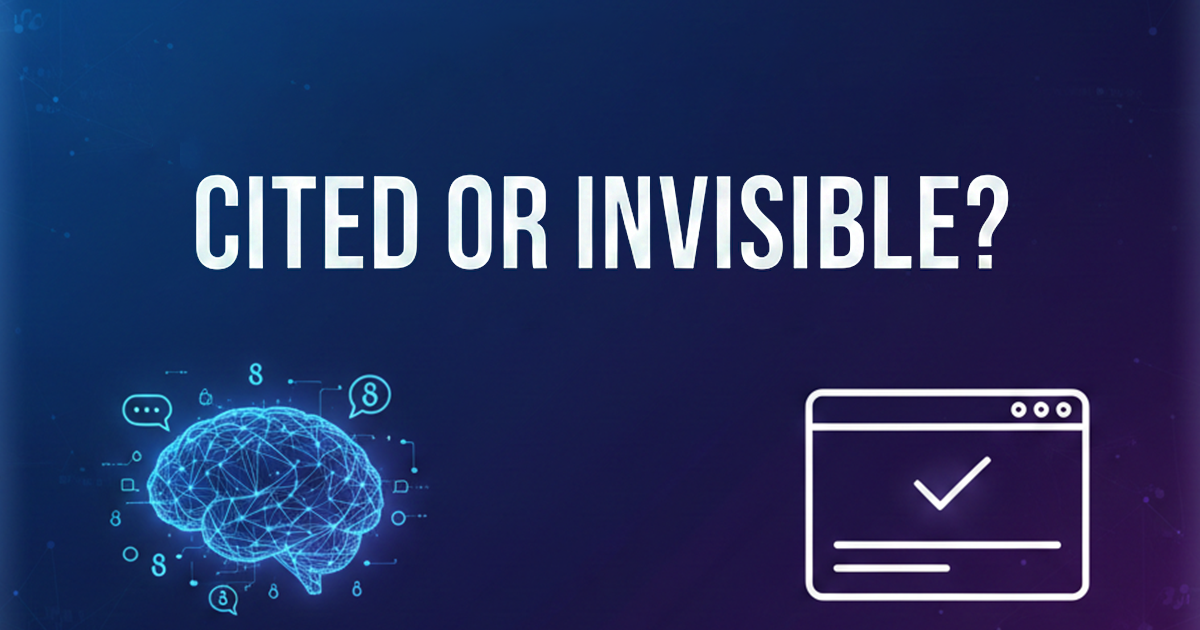
In 2026, the digital landscape has shifted from a "Library of Links" to an "Engine of Answers." We are no longer in the era of simple ranking; we are in the era of authority extraction. If you aren’t being cited by AI, you’re becoming invisible. As chatbots replace the traditional search results page, being "Page 1" doesn't matter if you aren't the footnote. This guide breaks down the mechanics of Answer Engine Optimization (AEO) to ensure your site is the one AI trusts.
In 2026, the digital landscape has shifted from a “Library of Links” to an “Engine of Answers.” If you aren’t being cited by AI, you’re becoming invisible.
Traditional SEO is about ranking #1 in a list. Answer Engine Optimization (AEO) is about being the source of the answer itself. This guide will show you how to move your site from merely being indexed by Google to being the primary citation for ChatGPT, Gemini, and Perplexity.
Part 1: What is AEO? (The New “Position Zero”)
AEO is the practice of optimizing your content so AI-powered answer engines can easily extract, synthesize, and – most importantly – cite it.
While SEO focuses on driving clicks to a page, AEO focuses on Entity Authority. It’s about convincing an AI model that your website is the definitive “source of truth” for a specific topic.
How it Works “Under the Hood”
Unlike traditional search engines that use a crawl-and-rank index, AI models utilize two primary systems:
- Large Language Models (LLMs): These are trained on massive datasets. They “know” things based on the patterns they learned during training.
- Retrieval-Augmented Generation (RAG): This is the “live” part. When you ask Gemini a question today, it searches the live web, pulls down the most relevant snippets, and uses the LLM to summarize them.
Search engines utilize AEO by breaking your content into “semantic triples” (Subject-Predicate-Object). If your content is structured clearly, the AI can “digest” it. If it’s buried in flowery prose, the AI skips it for a more structured competitor.
Part 2: Why Being Cited is the Only Metric That Matters
In 2026, over 25% of organic search traffic has shifted to AI chatbots. The “Zero-Click” reality is here. If an AI gives the answer without the user clicking your link, you lose traffic – unless you are the cited source.
The Benefits of the Citation:
- The “Trusted Source” Halo: When Gemini says, “According to [Your Brand]…”, your brand authority skyrockets.
- High-Intent Referrals: Users who click a citation link have already been “pre-sold” by the AI’s answer. They are 4.4x more likely to convert than traditional search visitors.
- Voice Search Dominance: Alexa and Siri don’t read a list of ten links; they read the one cited answer.
Part 3: The “How and Why” – AEO in Action
Example: The “How-To” Query
- Traditional SEO: You rank for “how to fix a leaky faucet” and hope they click your 2,000-word blog.
- AEO Strategy: You have a “How-To” Schema and a clear, 50-word summary at the top.
- The Result: ChatGPT pulls your exact steps into the chat window and adds a footnote link to your site. You get the brand credit and the high-value click-through.
Why it works: AI models are “lazy.” They prioritize content that is machine-readable (Schema), authoritative (E-E-A-T), and concise (Answer-centric).
Part 4: From Indexed to Cited (6-Month Roadmap)
This checklist is designed to transition your site from a standard search result to an AI-verified authority.
Phase 1: The Technical Foundation (Months 1-2)
- [ ] Audit AI Crawlability: Check your
robots.txtto ensure bots likeGPTBot,CCBot, andGoogle-Extendedare not blocked. - [ ] Deploy “The Big Three” Schemas: Implement FAQ, How-To, and Article JSON-LD markup on every relevant page.
- [ ] Build an “Entity Home”: Update your ‘About’ and ‘Author’ pages with Person/Organization Schema, linking to external social profiles and awards (using
sameAs). - [ ] Speed & Core Web Vitals: AI engines prefer citing fast-loading, mobile-first sites because they provide a better hand-off experience.
Phase 2: Content Re-Architecture (Months 3-4)
- [ ] The “Inverted Pyramid” Format: Lead every article with a 40–60 word “Definition” or “Summary” block that answers the primary keyword.
- [ ] Niche Question Research: Use tools like AnswerThePublic to find conversational “Who, What, Why” queries and create dedicated FAQ sections.
- [ ] Semantic Depth: Instead of just keywords, include Entities. If writing about “SEO,” ensure you mention “Crawling,” “Indexing,” “Sitemaps,” and “Algorithms” to show topical depth.
- [ ] Original Data & Research: AI models are trained on common knowledge; they cite new knowledge. Publish one original survey or data-backed study per month.
Phase 3: Authority & Tracking (Months 5-6)
- [ ] The “Surround Sound” Strategy: Get mentioned on high-authority industry sites (G2, Yelp, Forbes). AI models verify your “truth” by seeing if others agree with you.
- [ ] Digital PR: Focus on earning brand mentions (even without links) on news sites. AI models recognize “unlinked citations” as authority signals.
- [ ] Monitor Citation Share: Use tools like Profound or Amsive to track how often your brand appears in AI Overviews versus your competitors.
- [ ] Iterative Refresh: Update your most cited pages monthly. AI engines prioritize “Freshness” to avoid hallucinating outdated facts.
The Final Word
In the age of Gemini and ChatGPT, your website is no longer just for humans – it’s a data source for machines. If you structure your knowledge for them, they will reward you with the most valuable commodity in the digital age: The Citation.